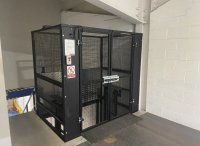
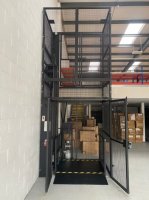
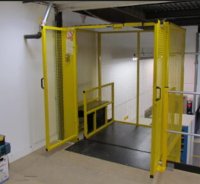
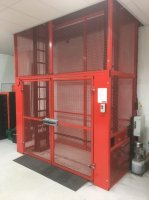
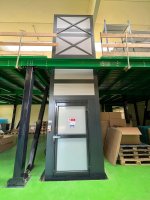
What Is a Mezzanine Goods Lift?
A mezzanine floor goods lift, also known as a mezzanine lift or platform goods lift, is a vertical platform that can lift up to 1000kg of goods, from boxes and crates to pallets and trolleys.
By enabling users to quickly, easily, and securely move objects onto the platform and between 2 or 3 floors, mezz lifts are ideal for diverse storage requirements in warehouses, factories, stores, and workshops.Why Choose a Mezzanine Goods Lift?

![]() | Increase usable space Make the most of the vertical space on your premises with a mezzanine floor, complete with a mezzanine lift,to ensure every cubic metre of space delivers maximum revenue. | | Easily move goods Carrying stock between floors can be tiresome, and not everyone is physically capable.A mezzanine lift can easily move goods from ground level to 2 or 3 floors with a single operator. | ||

![]() | Meet regulations A platform goods lift can help you adhere to health and safety guidance by removing potential manual handling hazards. | ![]() | Save time Manually transporting heavy objects can take a long time. With a mezzanine floor goods lift, you can move goods between floors in a matter of seconds. | ||
![]() | Avoid injury Manually handling heavy objects without proper training can lead to serious injuries. Take away this risk and improve safety with a mezzanine floor lift. |
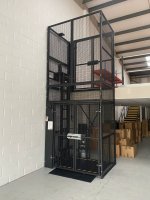
Goods Lifts for Warehouses, Factories & Commercial Buildings
Goods lifts are a practical and space-efficient way to move heavy or bulky items safely between floors. Often installed alongside mezzanine floors, these vertical lifting platforms are designed to transport pallets, crates, trolleys, cartons, and equipment with significantly less manual handling.
Where floor space is limited but vertical height is available, a goods lift helps you utilise every level of your premises while maintaining safe, consistent material flow — from warehouses and production areas to retail stockrooms and workshops.
Where Goods Lifts Are Commonly Used
- Warehousing & distribution — moving palletised goods between storage levels
- Manufacturing — transporting components, tooling, or finished products
- Retail & wholesale stockrooms — handling stock between floors safely
- Pharma & food environments — controlled movement between zones
- Workshops & service centres — lifting parts, equipment, and materials
Each installation can be tailored to suit your building layout, load requirements, and day-to-day workflow.
Mezzanine Goods Lifts Explained
A mezzanine goods lift (also called a platform goods lift) is designed to integrate with mezzanine floors. Goods are placed on a secure platform and lifted vertically to the required level, reducing reliance on manual handling or forklifts in confined areas.
Typical features include:
- Enclosed lift structures for improved safety
- Interlocked access gates at each level
- Platform sizes to suit pallets or trolleys
- Controlled loading/unloading for consistent operation
Improving Safety & Reducing Manual Handling Risks
Repeated lifting, carrying, or manoeuvring heavy items between floors increases the risk of strains, musculoskeletal injuries, and accidents. A goods lift removes that strain from daily operations.
- Reduce unnecessary manual handling
- Improve traffic flow by limiting forklift use in tight areas
- Support compliance with relevant health & safety guidance
- Cut downtime by creating a consistent, controlled process
The right specification and safe access arrangement (gates, interlocks, and enclosure design) makes a measurable difference to day-to-day safety and efficiency.
Customisation Options
Goods lifts can be configured to match your load type, space constraints, and number of levels:
- Load capacities up to 1000 kg (and higher for specialist applications)
- Single or multiple landing levels
- Internal or external installations
- Choice of gate types and safety features
- Bespoke platform sizes for pallets, crates, and trolleys
A properly specified lift delivers reliable performance and integrates smoothly into your workflow.
Installation, Testing & Ongoing Support
A goods lift is a long-term investment. Correct installation, commissioning, and planned servicing help ensure safe operation and minimise disruption. Professional support typically includes:
Routine inspections help extend lift lifespan, reduce downtime, and keep your operation running smoothly.
Book a Site Survey
Not sure which goods lift is right for your premises? Book a site survey and we’ll help you specify the correct capacity, platform size, and layout for safe, efficient movement between floors.
Typical info to share: building height, number of stops, load type (pallets/trolleys), and available footprint.
Frequently Asked Questions
What is the difference between a goods lift and a passenger lift?
A goods lift is designed for transporting materials and equipment rather than people. It prioritises load capacity, platform size, and controlled access features such as interlocked gates and enclosures.
Do goods lifts require planning permission?
Many internal installations do not require planning permission, but requirements can vary depending on the building, location, and installation method. A site survey can confirm what applies in your case.
What load capacity do I need?
Choose a capacity based on the heaviest load you plan to move, including pallets, trolleys, or equipment — and allow extra headroom for future changes. We can help you confirm the right specification during a survey.
Can a goods lift be installed in an existing building?
Yes. Goods lifts are frequently retrofitted into existing facilities, provided there is sufficient vertical clearance and a suitable footprint for the lift structure and safe access points.
How often should a goods lift be inspected?
Inspection frequency depends on usage and manufacturer guidance. Regular servicing and routine inspections help identify wear early, maintain safe operation, and reduce unexpected downtime.
Do you supply and support mezzanine goods lifts?
Yes — we can help specify a mezzanine goods lift solution to suit your load type, building layout, and required landings, and support you with installation, testing, and ongoing servicing.